The Art of Thread Rolling How Modern Machines Shape Metal Threads
Understanding Thread Rolling: A Modern Manufacturing Marvel
What is Thread Rolling?
Thread rolling shapes metal into precise threads through plastic deformation instead of material removal. Operators feed wire or bar stock between hardened dies that press grooves into the workpiece under high pressure. This cold-forming method produces stronger threads with superior fatigue resistance compared to cut threads. Modern thread rolling services deliver consistent results across high volumes of fasteners used in demanding environments. The process preserves grain flow along the thread profile, which increases tensile strength and surface hardness. Manufacturers select thread rolling when they need tight tolerances on bolts, screws, and studs destined for structural assemblies.
History and Evolution of Thread Rolling
Thread rolling began in the early nineteenth century as a manual technique for creating screw threads on small parts. Early machines relied on flat dies and hand cranks until power-driven versions appeared in the 1860s. By the mid-twentieth century, manufacturers adopted cylindrical dies that allowed continuous production of long threaded rods. Today’s automated systems integrate sensors and servo controls that maintain uniform pressure across each cycle. This evolution shifted thread rolling from a niche craft to a core capability in fastener manufacturing worldwide.
Applications in Various Industries
Aerospace engineers specify rolled threads on engine mounts and landing-gear bolts because the process yields parts that withstand extreme vibration cycles. Military contractors rely on thread rolling services for ammunition casings and vehicle components that must meet strict proof-load requirements. Oil and gas operators use rolled threads on drill pipe connections and valve stems exposed to corrosive fluids and high torque. Automotive plants roll threads on wheel studs and transmission shafts to achieve both strength and cost efficiency. Medical device makers apply the same technique to bone screws that demand clean surfaces and reliable engagement.
The Technology Behind Thread Rolling Machines
Types of Thread Rolling Machines
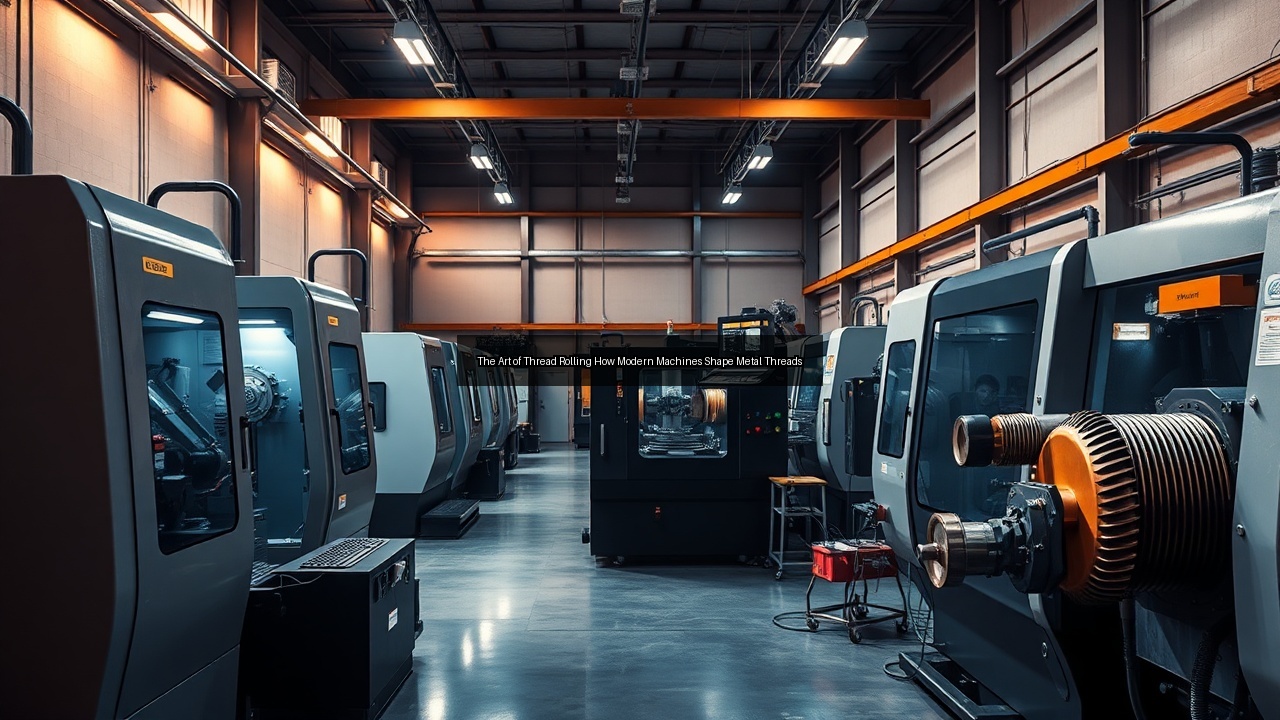
Flat-die machines handle short fasteners at high speed by passing blanks between two opposing plates. Two-die cylindrical machines rotate the workpiece between parallel rolls for longer threads and better concentricity. Three-die machines provide even support around larger diameters and are common in heavy-equipment production. Each configuration supports different production rates and part geometries, allowing manufacturers to match equipment to specific fastener families. Thread rolling services often maintain multiple machine types to cover the full range of client specifications.
CNC vs. Conventional Thread Rolling
CNC thread rolling machines store programs for rapid changeovers between thread sizes and pitches. Servo-driven axes control die pressure and feed rates with micron-level repeatability, reducing scrap on expensive alloys. Conventional hydraulic machines require manual setup and produce acceptable results for standard carbon-steel fasteners. Manufacturers choose CNC equipment when they run mixed batches or when traceability demands recorded process parameters. Both approaches remain relevant, yet CNC platforms dominate new installations because they integrate directly with enterprise scheduling software.
The Role of EDM in Thread Rolling
EDM machining creates the precise contours on thread rolling dies that determine final thread geometry. Wire EDM cuts intricate flute patterns into carbide inserts without inducing heat-affected zones that could shorten die life. Manufacturers use EDM to produce custom dies for nonstandard thread forms required by aerospace and defense programs. The same technology repairs worn dies by adding material and re-machining the profile. Thread rolling services that control their own EDM capabilities shorten lead times for specialized tooling and maintain tighter quality loops.
Materials and Techniques in Thread Rolling
Choosing the Right Metals for Thread Rolling
Low- to medium-carbon steels respond well to thread rolling because they exhibit good ductility under cold pressure. Stainless grades require higher forces and sometimes warm rolling to avoid work hardening that cracks the thread flanks. Titanium and nickel alloys appear in aerospace fasteners; these metals demand polished dies and controlled lubrication to prevent galling. Manufacturers evaluate elongation and yield strength before committing a material to thread rolling services. Proper alloy selection directly affects die wear rates and the mechanical performance of the finished fastener.
The Importance of Grinding and Machining
Accurate blank preparation through grinding and machining ensures the starting diameter falls within the narrow window that allows complete thread formation. CNC grinding centers produce blanks with consistent roundness and surface finish that reduce die loading spikes. Subsequent thread milling or light turning operations remove burrs before rolling begins. Shops that combine precision grinding with thread rolling services achieve higher first-pass yields and lower overall cycle times. Consistent blank geometry also prevents uneven thread crests that would fail inspection.
Knurling and Its Relation to Thread Rolling
Knurling creates a patterned surface on cylindrical parts for grip or press-fit applications. The same flat-die principle used in knurling transfers directly to thread rolling when the dies carry helical grooves instead of straight knurl patterns. Some manufacturers run combined operations that produce both knurled sections and rolled threads on a single machine cycle. This integration reduces handling and maintains alignment between features. Thread rolling services that offer knurling as a secondary capability provide customers with complete turned-and-threaded components from one source.
Thread Rolling Services: Enhancing Production Efficiency
Benefits of Outsourcing Thread Rolling Services
Companies that lack specialized equipment send parts to dedicated thread rolling services for faster turnaround and lower capital investment. External providers maintain fleets of machines calibrated for different thread classes and material families. They also stock common die sets, eliminating the need for individual manufacturers to purchase seldom-used tooling. Outsourcing shifts responsibility for process development and quality documentation to specialists who perform the work daily. The result is consistent thread quality without the overhead of in-house rolling departments.
Comparing Thread Rolling with Other Threading Methods
Thread cutting removes material and leaves discontinuous grain flow that reduces fatigue life. Thread milling offers flexibility for large or odd-shaped parts but still interrupts the grain structure. Thread casting works for nonferrous castings yet cannot achieve the strength of cold-worked threads. Thread rolling displaces metal to form continuous grain lines that follow the thread contour, delivering superior tensile and shear performance. Manufacturers select thread rolling whenever part drawings call for rolled threads or when service conditions include cyclic loading.
Case Studies: Thread Rolling in Aerospace and Military Applications
An aerospace supplier replaced cut threads on titanium landing-gear pins with rolled threads and recorded a 40 percent increase in fatigue cycles before crack initiation. A military contractor outsourced thread rolling services for steel actuator rods and reduced scrap from 8 percent to under 1 percent while meeting MIL-SPEC proof-load requirements. Both programs benefited from the compressive residual stresses left by the rolling process, which delay crack propagation under repeated loading. These documented gains illustrate why designers continue to specify rolled threads for critical load-bearing components.
Future Trends in Thread Rolling Technology
Advancements in CNC and Swiss Screw Machining
Next-generation CNC platforms combine thread rolling with Swiss screw machining in single setups that produce complete precision fasteners without secondary handling. Integrated probing verifies thread pitch diameter immediately after rolling, allowing real-time compensation. Swiss screw machines equipped with rolling attachments now handle parts under 10 mm diameter at cycle times previously reserved for larger equipment. Manufacturers adopting these hybrid cells report reduced work-in-process inventory and tighter control over dimensional variation.
Sustainability in Thread Rolling Practices
Thread rolling generates no chips, which lowers material waste and simplifies coolant management compared with cutting operations. Modern machines recycle lubricant through high-efficiency filtration systems that extend fluid life and reduce disposal volumes. Some thread rolling services track energy consumption per part and optimize feed rates to lower power draw. These practices align with customer sustainability targets while maintaining the mechanical advantages of cold-formed threads.
Inventory Management for Manufacturers in Thread Rolling
Manufacturers in Wisconsin and other industrial regions use real-time inventory software that links thread rolling service schedules directly to raw-wire stock levels. Automated reorder points prevent stockouts that would halt fastener production lines. Cloud-based dashboards display die usage and predicted maintenance intervals, allowing planners to reserve machine time before critical runs. Effective inventory control supports just-in-time delivery of rolled threads while minimizing capital tied up in finished goods.